Tuesday, April 23, 2019

Mass Prep Sunday May 5th 2019 3rd Sunday of Easter (Cycle C)


Sunday May 5th 2019    3rd Sunday of Easter (Cycle C)

What Do You Say?

The tie in between today’s readings: Out of the Heart the Mouth Speaks (Matthew 12:34)


     What do you say when everything is going right? In Psalm 30, after the Lord had rescued him from narrow escapes, put down all his enemies, and established his throne, King David responds in pride. In verse six he basically says, “I’ve made it to the top and I’m here to stay!” God didn’t like that. He unfriends David from His face book account. Here is an important insight into David’s saintly character: he could have chosen to go on living proud in his own power, without any further help from the Almighty, but instead, he calls God up to mend fences. On the first phone call (verse 9), with his pride still going strong, David leaves a message telling God that He would only be hurting Himself by breaking off their relationship. The Lord, who needs no one, doesn’t even return the call. In verse 10, a humbler David calls back and they make up. An overjoyed king learned his lesson. Prosperity can foster pride. Watch out! God resists the proud but gives grace to the humble (Proverbs 3:34).

     Speaking of pride...what do you say when, after boasting that you would never forsake the Lord and then you do it hours later...three times? Not to mention, that in a few days, on Easter Sunday, Jesus rises from the dead and comes to pay you and your friends a visit? Can you say awkward? Peter is so guilt ridden that the third time they all encounter Jesus, in John 21:1-19, he is patently overcompensating like a husband who forgot the anniversary. They see Jesus on shore from their boat. Peter can’t wait to row into shore with the others. No, he has to dive in and swim to Jesus! Then, everybody out of the way! Good ‘ol reliable Pete has to be the one to drag the big heavy net with the big catch of fish over to the fire! OK, there’s a six hundred pound gorilla in the room that Jesus needs to deal with. “Simon, son of John, do you love Me?” Jesus asks Peter three times and three times He gets a humble, yes. The Lord doesn’t berate, ask for an apology, or demands a promise to do better. Jesus knows that Peter loves Him, loves Him so much that, in restoring their relationship, the Lord tells Peter that he will be martyred for his testimony. That is because perfect love dispels all fear (1 John 4:18). And now, Peter is fearless.


     What do you say when Peter the Deny-er become Peter the Defy-er? That’s the situation the high priest and the Council faced in Acts 5:27-41. They hauled Peter and the apostles in for a “We thought we told you guys before” session over their preaching of Christ’s resurrection. They all got a straight back at you answer with an “in your face” testimony: “You killed the Messiah. He rose again and sits at the right hand of God. You can still come to Him for the forgiveness of your sins. We are His witnesses and if you don’t like it, too bad! We work for God!” Incensed, the Council intended to kill our bearers of the Good News before they could get a chance to reach Acts Chapter 6. But a cooler head prevailed. Gamaliel, a respected Pharisee, says, “Look, we’re not so sure what we're dealing with here. Guys like these come and go for the most part. Let’s take the P.R. hit for now and wait until it all blows over. Who would remember? But, if these apostles are the real deal, then our arm’s too short to box with God.” So the Council warned, whipped, and released the apostles. Down the street, you could hear them praising God that they were considered worthy to suffer for Jesus, all the while comparing floggings to see which one gets the “biggest beating” bragging rights. “Fanatics,” someone murmured.

     What do you say when you’re confronted with the truth of Christ, real and raw? The answer is found in Revelation 5:11-14. Draw back the celestial curtains and you’ll hear the countless numbers of heavenly creatures loudly proclaim, “Worthy is the Lamb that was slain to receive power and riches and wisdom and might and honor and glory and blessing” (Rev 5:12). Then, to add to all those “ands”, EVERY created thing on the earth, under the earth, and in the sea join in: “To Him who sits on the throne, and to the Lamb, be blessing and honor and glory and dominion forever and ever” (Rev 5:13). That pretty much covers the waterfront, don’t you think? To sum up, as the Bible says: “Every knee will bow and every tongue confess that Jesus is Lord to the praise and glory of God” (Philippians 2:10-11). It is clear that you will confess Jesus as Lord, willingly or unwillingly. So don’t be proud like David. Don’t be stubbornly in denial like the Pharisees. Don’t live in guilt like Peter. Humble yourself and confess your sins to Jesus. He will forgive you and in His love, perhaps you will even become fearless. What do you say?

Monday, April 22, 2019

Mass Prep Sunday April 28th 2019 2nd Sunday of Easter Cycle C


Sunday April 28th 2019 2nd Sunday of Easter (Cycle C)

Two Sides of Jesus

The tie in between today’s readings: Fear and Love

     Today’s readings show two different sides of Jesus. It demonstrates the healthy tension that we need in approaching our God. He loves us and we love Him. This close relationship makes it easy to slip too far into the familiar when we approach our Father. From there, we think that He is just like us and we proceed to remake Him in our Mr. Rogers’ image. Contempt creeps in and discipline from the Lord follows to remind us that He is God, not our Bud. On the other hand, how can I even relate to a Being that is so totally other? He doesn’t think like me. I don’t act like Him. He searches all thoughts and judges with consequences. I ask myself, “Who is this Person that I am commanded to fear and draw close to at the same time?" I think that C.S.Lewis had it right in the Chronicle of Narnia, where Aslan represents Jesus.


Google Images

“Aslan is a lion- the Lion, the great Lion." "Ooh" said Susan. "I'd thought he was a man. Is he-quite safe? I shall feel rather nervous about meeting a lion"..."Safe?" said Mr Beaver ..."Who said anything about safe? 'Course he isn't safe. But he's good. He's the King, I tell you.”


     In John 20:19-31, the disciples are hunkered down, afraid for their collective lives, and confused about all the fantastic happenings of this first Resurrection Sunday. Then, through the door-yes, through the door-comes Easter Jesus, the comfortably mysterious Messiah they’ve all come to know and love. For their fear, Jesus gives them His peace. For doubt, He offers them proof. He commissions them to go out into the world with the gospel’s sin remedy message and gives them the Holy Spirit’s power. His patience shines through when He comes back eight days later to prove Himself to Thomas, who apparently was picking up the pizzas the time before and missed out. And what happened?

     In Acts 5:12-16, they are out preaching the gospel and establishing their street creds. Peter had just finished his apostolic prerogative of retaining sin with a drop dead judgment of Ananias and Sapphira. As a result the Bible records, “So great fear fell upon the church and all who heard it” (Acts 5:11). Do you think? The Apostles healed so many people so dramatically that just having Peter’s shadow fall on them was enough! Unclean spirits were exorcised. Their reputation was spreading throughout the area and multitudes were being saved. Churches were being established and there was a whole lotta love! Aaah, the good old days!

     The Apostle John was a young man then. Now he is old and exiled on the Island of Patmos by the decree of Rome for of all things: atheism. It has been a long hard road of perseverance and tribulation since the Acts Chapter Five days. He had poured out his life testifying and preaching God’s word around the Mediterranean region. Tired and ready to meet his Maker, he is surprised when Jesus pays him a visit. But it’s not Last Supper Jesus, the guy who let him lay on His bosom (John 13:23). It’s Glorified God Jesus...Scary Jesus! It’s the Lord, the operations manager of His churches  (Revelations Chapters 2 & 3). He is the Ancient of Days and the Son of Man, in orhter words: God Almighty. He wears the white priestly robe of righteousness. His all seeing eyes scrutinize everything. Nothing escapes His gaze. His powerful voice speaks the sword sharp words of God, cutting though soul and spirit as well as thoughts and intents of the heart (Hebrews 4:12). His face radiates with the glory that cannot be contained. Scared out of his mind, the apostle couldn’t hit the deck fast enough; he falls at His feet like a dead man. What does Jesus say?  “Don’t be afraid. I Am the first and the last, the One who has the keys to death and Hades, I’m the One who died and Am alive forevermore...and because I live you will live also.” Beloved, John, I have a job for you.

     As believers, we need to keep the balance between God our Father and God our Master. The Lord is both kind and severe (Romans 11:22, Psalm 118).Yes, He loves us. At the Last Supper, Jesus became the Lamb of God who takes away the sins of the world. He died for us on Good Friday and rose again on Easter Sunday, so that we may become children of God in Him by faith. That’s not the end of it. God expects you to grow up and reflect who He is in this world. He wants you to be like a little Jesus through the power of the Holy Spirit. This takes: discipline, prayer, perseverance, faith, and yes, suffering. Take up your cross. Let God your Master produce a return on His investment in you, for the praise and glory of His name.

     If you are not a believer, if you don’t know Last Supper and Easter Jesus, if you have never come to Christ by faith for forgiveness of your sins, then now is the time. The love of God is offered to you today, through the sacrifice of Christ. Come now. Confess and be forgiven. Otherwise, your sins will keep you marked as an enemy of God. That only leaves you with Scary Jesus. Don’t go there!

Saturday, April 20, 2019

Mass Prep Sunday April 21st 2019 Easter Sunday


April 21st 2019     Easter Sunday (Cycle C)

Believing unto Salvation

The tie in between today’s readings: Examining Faith

     The stone which the builders rejected has become the chief corner stone. This is the Lord’s doing; it is marvelous in our eyes (Psalm 118:22-23). The despised, rejected, and crucified Jesus Christ has been raised from the dead and now is exalted and glorified by God the Father. What a difference the few days from Good Friday to Easter Sunday make! Surprisingly, even after Jesus repeatedly told His disciples that He must rise from the dead, they still did not understand the scriptures (John 20:9). In time, though, they did catch on and turned the world upside down. They and those that followed after them fanned out to the four corners of the earth to spread the good news that anyone who believes in the name of Jesus receives forgiveness of sins (Acts 10:43). But what does it mean to believe in Jesus and why is faith so vital?

     First, faith must launch off a solid base of facts. The death, burial, and resurrection of Christ is the most historically scrutinized and vindicated event in history. The authenticity of His resurrection validates everything that Jesus said about His deity and His mission. It establishes Christianity uniqueness among the world religions because its Founder transcends death and offers eternal life to all who will follow Him. One of the very reasons to trust the Bible at all is because Jesus is alive. From this body of truth the church developed creeds of beliefs, which church members confess and adhere to as fact. Believing in a creed, as truthful and necessary as it might be, however, is not saving faith. It is only the first step on the way. Your factual faith has to reach out and go beyond to achieve saving faith.

     In order to better understand what I mean by reaching out in saving faith, I want to introduce an underlying principle found in the Bible. It’s the concept of becoming united with whatever or whomever you touch. There are several accounts of this in the Old Testament. You could become unclean, for example, if you came in contact with something that was also considered unclean such as a dead body, unclean animals, or a disease like leprosy (Numbers 5, Leviticus chapters 11-21).  One the other hand, you could be made holy if you were touched by something that was holy, as seen in Isaiah 6. A clear example in the New Testament is the unclean woman with the bloody discharge who received healing power by touching Jesus’ hem (Mark 5:25-34 and Luke 8:43-48). Marriage and sex contains this idea of the two becoming one also. There are more examples, but the Bible’s greatest application of union by touch is seen in the Incarnation, when God became man.

     There were incidents in the Old Testament where God appeared in human form. These are called Theophanies. In fact, if the Lord had just wanted to give us an example of how to live, Jesus could have spent His life with us on earth as a Theophany and that would have been good enough. The Incarnation goes way beyond God as teacher and takes us to height of relationships: God as Lover. Christianity is much more a relationship than a religion. God, who is Spirit, touches physical man in Jesus. It was absolutely necessary for the Almighty to humble Himself and become one of us in order to unite with a fallen human race. In this condition, Jesus, the God-man, can be our sin bearing Savior. On the cross, Our Lord and Lover, Jesus Christ died for our sins. Now this is where saving faith comes in.

     Think of faith as the physical touching the spiritual. It is one of the few God given attribute available to us that transcends space and time. By faith, we can imagine the future and act in anticipation of it. We can also, by faith, travel back in time to a cross on Calvary’s hill and touch our God. Jesus Christ physically died on the cross. Faith puts us on the cross with Him spiritually at the same time. At the cross, the Eternal and Spiritual through the Incarnation meets up with the physical and finite through faith and the two of us become one. It is here that,”He who knew no sin became sin for us that we may become the righteousness of God in Him” (2 Corinthians 5:21). And we DIE together with Christ! As the Apostle Paul said, “I have been crucified with Christ” (Galatians 2:20a). When Jesus was laid in the tomb, we were laid in the tomb as well, but that’s not the end. Now if we died with Christ, we believe that we will also live with Him (Romans 6:8).


     Jesus is alive! He rose from the grave on Easter Sunday and by faith, we did as well. We are born again to a new life in Christ. A life with our Lord that is so real and so intimate that we can move away from the abstract idea of loving God and actually be in love with Him. For His part, our Father could not get any closer to us than what He has done by placing His Holy Spirit in us. This relationship comes with a new focus. Our reading in Colossians directs us in our new life priority:

     “Therefore if you have been raised up with Christ, keep seeking the things above, where Christ is, seated at the right hand of God. Set your mind on the things above, not on the things that are on earth. You have died and your life is hidden with Christ in God. When Christ, who is our life, is revealed, then you also will be revealed with Him in glory “(Colossians 3:1-4).

     Can you picture a new church experience? If our lives are hidden in Christ, then in our worship we transcend the centuries and unite ourselves by faith with the sacrifice of our Lord and Savior. The tangible bread and wine brings His sacrifice to us in our time. In the Lord Supper, we have a common connection of grace and love with all believers living close by or around the world and even with those that have passed on. We are all Christ’s Body! It's a living, timeless, family dynamic. Our Father wants us to spread His gospel to others who do not yet know Him, so more sons and daughters can be added to His family. If your time in church has been dull, dry, and dead end, perhaps you’ve been stuck on the creed level in your faith journey. If that’s the case I urge you to reach out in faith to the cross for the forgiveness of your sins and establish a living relationship with the God who loves you. Look to Jesus with new eyes of faith and believe. Happy Easter!

Tuesday, April 16, 2019

Mass Prep April 14th 2019 Palm Sunday


Sunday April 14th 2019     Palm Sunday  (Cycle C)

How Do You Relate To Jesus?

The tie in between today’s readings: The People in the Passion


     It began in the mind of the Trinity in eternity past before the foundation of creation. So radical an idea it blindsided the hosts of heaven. The plan went into effect at the Incarnation and reached its’ climax at the Crucifixion. The brilliantly absurd humiliation campaign of God Almighty as described in today’s reading in Philippians 2:6-8 was absolutely necessary in order to redeem a fallen human race. His act of love for us also gives us glimpses into attributes that otherwise would have remained hidden. Besides humility, we see grace, mercy, patience, and loving kindness so unexpected from a God who must be holy and just. The Psalm 22 and Isaiah 50 references about Jesus’ crucifixion agony also show us that our God is courageous. Having seen how the Lord relates to us in our condition, I want to use the players in today’s gospel reading, Luke 23:1-49, to reflect on how we, as fallen human beings, respond to the Father’s courageous, humble, unspeakable gift: Jesus Christ. Don’t look for historical accuracy. Just focus is on general character traits. Be honest.

Pontius Pilate
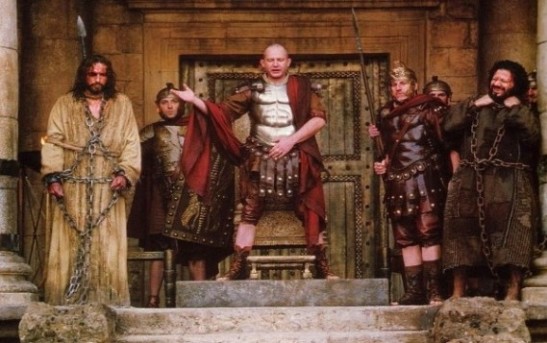
A sycophantic politician, Pilate showed his lack of core beliefs with the cynical, “What is truth?” sneer in John 18:38. Because of his heavy handed methods of keeping the peace, Rome received many complaints about our governor. Pilate is on thin ice. So he knows it’s gonna be a long day when Jesus, the chief priests, and a crowd show up at his doorstep before breakfast. He tries to avoid the problem with a series of ducks and dodges, even his wife tells him to let Jesus go, but to no avail. In the end, the Jewish rulers threaten to go over Pilates head and report him to Rome. What else can a self seeking, spineless, pragmatic kinda guy do?  He washes his hands of it all and seals his reputation in history by condemning the innocent Son of God to death in order to save his own skin. Maybe he should have listened to his wife. Bringing it forward to today, when the crowd you’re with is amoral, atheistic, and anti-Christ, what do you do? Rock the boat by standing strong in your faith? Say that you never knew Him by keeping your silence? Go to the bathroom?  It’s a hard place to be even for the best of us, but we must be ready to give an account of our faith in love.


Google Images


Herod
Herod had many questions and had always wanted to meet Jesus. These weren’t honest questions leading to belief, though. They were more the mocking prove to me challenge questions of the skeptic. Jesus did not answer nor did He put on the early morning magic show that Herod anticipated. He sent the Lord back to Pilate, unamused. Are you the skeptic? Are you the type who will not believe unless he sees? Does Jesus have to walk through the wall for you before you confess Him as your Lord? Don’t hold your breath. First, seeing is not believing, believing is seeing. Miracles bolster faith; they don’t produce it. Second, Jesus Christ does not do tricks nor does He cast His pearls before the contemptuous. He will, however, guarantee answers to the true and honest seeker. Which one of these two types are you?

Barabbas
Guilty and condemned to death, Barabbas is the illustration of the sinner being acquitted from his consequences by Jesus who became his substitute. Jesus is his get out of jail free card! Barabbas is understandably overjoyed by his unbelievable luck. The question is does he mistake luck for grace? Most church members have an idea of sin forgiveness through Christ’s sacrifice, but it stays on the contractual level. God loves me. He provided an insurance policy protecting me from Hellfire. I “believe” and get it free because my Savior paid the premium for my policy on the cross. When I sin, I am always forgiven, covered by my Jesus policy. Of course I say that I’m sorry, duh! No real contrition. No repentance, just an unlimited Christ tab for vices committed. This superficial salvation understanding of the gospel is tragically misinformed. There must be a true transformation in the believer to want to live according to God’s will. Believing without a changed life is a deception. Satan is laughing. Do you think that faith in Christ is just taking advantage of a good deal when you see one? Examine yourself to see if you really love God. Hunt for a true understanding of the gospel and God’s grace for you in Christ. Be truly born again.

Simon of Cyrene
Jesus doesn’t look like He’s gonna make it. The soldiers pull an onlooker out of the crowd, Simon of Cyrene, and force him into carrying the cross. He reminds me of the pew sitters. Roll in every Sunday, pretty much have their own spot reserved, week after week, year after year no other involvement with the Body of Christ besides singing the songs, praying the prayers, and dropping a few bucks in the plate. There for what they can get out of the service, they have to be guilted or cajoled to give any service of their own. If this is you, turn it around. Look for opportunities to participate in church life: join a Bible study, teach a class, sing in the choir, whatever gifts you have and time will allow. You will grow closer to other believers and to God in the process.

The Thief on the Cross
Almost an add on incident, the thief on the cross is the exception to the rule of all who limit the dispensing of grace to sacramental ceremonies. No Baptism, no Communion, but with a last minute confession, skips to the front of the line of heaven’s turnstile. At the same time he is the inspiration to anyone who wants to live for the Devil and then slide into heaven on a deathbed conversion. I, myself, think that he is a marvelous example of salvation being a God thing. In Matthew 27:44, the Bible notes that at the start, both thieves on either side of Christ were insulting Him along with the crowd, as if they didn’t have enough troubles. Then, miraculously, one of them does a total 180, rebukes his partner in crime, and has his “come to Jesus” moment. The Messiah promises him that he will enter Paradise.  What made the difference? God spoke to his heart. The Lord uses a variety of scenarios and circumstances to get our attention away from the noise of this world. Many of our “Why me?” or “How could this happen?” trials could be just that. Listen for His still small voice. As the Bible says: “If you hear His voice today harden not your heart” (Hebrews 3:15). By the way, if you are counting on a deathbed conversion...aaaah, good luck with that. Even if you get the opportunity, the
Almighty will not take too kindly to the fact that you really don’t want to be with Him in heaven; you just want to avoid hell. Understand this, in all things salvation: the heart is the heart of the matter. Where is your heart toward God today?

     The gospel ends with the crowd dispersing. Jesus Christ has died on the cross for their sins and ours. He rose from the grave on Easter Sunday, triumphant! The humiliation of the Almighty is over! The Father has exalted the Son so that every knee will bow and tongue will confess Jesus is Lord (Philippians 2:9-11). How does Christ’s sacrifice on the cross affect you? Do you see yourself in any of our portraits? Are you like the crowd, standing far off, not even in the picture? Do you want to make a change? There’s room at the foot of the cross for you. Get the picture. Come to Jesus.


Sunday, April 14, 2019

Mass Prep Sunday April 6th 2019 5th Sunday of Lent


Sunday April 6th 2019      5th Sunday of Lent (Cycle C)

Making It All Better

The tie in between today’s readings: Restoration


     There is a big difference between discipline and punishment. Discipline’s purpose is for training in order to achieve a more mature behavior. It focuses on the person with an attitude of love and concern. God, our Father, disciplines His children for example. Discipline ends with restoration and a new start for all parties involved. Punishment is much different. It is totally hindsighted. It is reciprocation springing from wrongs suffered: an eye for an eye. The statement that, God the Righteous Judge, will punish the wicked in hell, shows that punishment ends the relationship with the balancing of the scales. There is no coming back. That’s why comic book character, Frank Castle is called the “Punisher” and not the “Disciplinarian”. Today’s readings highlight two different episodes of God’s loving discipline and restoration.

     After many years of lip service religion and outright disobedience, the nation of Judah finally achieved a truly difficult milestone. They wore God out. Prophet after prophet came time after time with the same message from the Almighty, “Don’t make Me come down there!” Apparently, they weren’t going to be happy until they got their beating. And a beating they got along with total devastation with a one way ticket to subjugation in Babylon. But there was a glimmer of hope recorded by the prophet Jeremiah in Lamentation: “It is of the Lord’s mercies that we are not consumed, because His compassion does not fail” (Lamentations 3:22). Here the God of Abraham, Isaac, and Jacob graciously holds out the promise that there will again be a “someday” for them. They were, after all, still His children. He sat them in the corner of Babylonian exile for seventy years and now it was time for them to come home.

     There is a special joy in restoring a relationship. We see it in a loving parent’s hugs and kisses for their crying child after a time out, the junkie returning to an understanding and supporting home post rehab, or the makeup sex that follows a young couple’s quarrel. It’s the cheers after the tears. With God, it is no different. In Isaiah 43:16-21, one of today’s readings, the Lord in a great gesture of “Welcome Home” comforts His children with a forgiving, forget about it! Then goes further in a parent’s excitement to describe the “You ain’t seen nothin’ yet!” fantastic future that He planned for them. Psalm 126 responds with “pinch me I must be dreaming” excitement when God performed the miracle of bringing His exiles back to Jerusalem to rebuild. Joyful shouts and crying gladness filled their hearts as well as the streets when the walls of Zion were completed. With one tough job finished, they looked forward to the next challenge of restoring the Temple. They proceeded with confident optimism because God was with them and the joy of the Lord was their strength.


Google Images


     At the beginning of today’s gospel reading in John 8:1-11, Jesus is teaching in the temple. Suddenly, a loud commotion erupts. The street crowd parts in an undulating wave to allow a cluster of harden men to pass. They are barely discernible against the mob which gathers behind them as if drawn by a magnet. A young woman’s panic stricken screams grow like a siren in intensity as they approach the Master. They break through and two husky brutes throw the crying girl to the ground at His feet. Her scantily clad body adds to her humiliation as she looks up at Jesus from her hands and knees. She is shaking, she is exposed, and she is terrified. An older man, a Pharisee, accuses her of adultery and demands a death sentence judgment from Jesus as he points to her quivering frame with a righteous boney finger. Jesus understands their trap. The Law of Moses requires stoning to death for the woman and the man, who apparently got away. Only Rome could authorize an execution, though, and they certainly would approve of this one. Jesus seems to be between a rock and a hard place. He, however, is more concerned about this poor daughter, who's next intimate contact could very well be a fatal shower of Palestinian landscape. Fortunately, Jesus has a finger all His own. He gets down on the ground next to her and writes in the dirt. Pressing Him for an answer, Jesus straightens up and challenges the most moral among them to throw the first stone. She flattens, shrieks into the ground, covers her head while she puddles the dust with her tears, and waits for her imminent pummeling. Nothing happens as Jesus gets back to the dirt to continue writing. The accusers become convicted and leave one by one along with the crowd. Show’s over. Jesus lifts the young girl up. She is overwhelmed by her escape and barely comprehends His question. “Where are your accusers?”
“They are gone, Lord.” she replies, astonished.
“I don’t condemn you, either.” Then Jesus added, “Go and sin no more.”
More tears and sobs as the young lady turns and disappears back into the indifferent crowd that would have just as soon seen her dead as alive. But these are tears of joy, of relief, of mercy received and restoration given. Her time had not yet come and because of the love of her Messiah, whose own time was fast approaching, she was determined and able to make a new future.

     The Apostle Paul picks up this theme of restoration with a personal note in Philippians 3:8-14. He sees that he cannot keep the Ten Commandments as he is supposed to, no matter how hard he tries. Punishment for his sins looms ahead. So he gives up on his own merits and, by faith, takes Jesus’ righteousness offered by God through the sacrifice of His Son on the cross. Jesus is the key to the contradictory image we may have of a God who holds a club over our heads and at the same times says, “Don’t you know that I love you?” Having had his punishment removed by the blood of Christ, the Apostle can own his imperfections and leave the guilt of them behind. He can, as a child of God, focus toward the future and the Lord’s upward calling for him. With guidance and discipline from the Father, he will achieve it. This offer of salvation and restoration is for you also. Come to the cross. Come clean. Come to Jesus. Leave reconciled. Leave restored.


Saturday, April 13, 2019

Mass Prep Sunday March 31st 4th Sunday of Lent


Sunday March 31st 2019      4th Sunday of Lent (Cycle C)

The Journey Home

The tie in between today’s readings: In a Far Country

     The purpose of a journey is to be transformative. I’m not talking about your daily routine commute. That’s just a rut. I mean the vacation to a new and exotic place, the cruise where you meet exciting people, or the test of a rugged wilderness trek. While we plan and anticipate these kinds of getaways, daily life can be forays of discovery in themselves if we decide to not merely see, but observe. This makes me think of the Wizard of Oz, where the answer to Dorothy’s yearning was right there in front of her. The quest that took her over the rainbow was needed to open her eyes. God challenges us to walk with Him daily in life’s adventures to open our eyes to a better understanding of Him and ourselves. Because I think their messages conflict somewhat, I want to contrast the Wizard of Oz against our Bible readings today to see how each of them gain their happily ever afters.

The Escape Journey

      Dorothy Gale and the Prodigal Son cannot get away from their farms fast enough. The problem with escaping from something is that you are always escaping to something else. For both of them the saying “the grass is always greener” quickly turns into “be careful what you wish for”. Dorothy went over the rainbow and wanted to get back as soon as she arrived in Munchkinland. Our Prodigal was too busy partying and needed more time to come to his senses before he looked homeward. Either way, it’s the moral learned from the journey that’s important. Our heroine from the Heartland returns with the epiphany that she should look within herself for her power and live her truth. She becomes her own goddess; therefore, Dorothy’s definition of truth is Dorothy. It’s the sum total of her knowledge, prejudices, and desires. It will shift with time and situations. Changing truth is a contradiction of terms and, in the end, is no truth at all. The key to the Prodigal Son is “My son was dead and is now alive!”  After landing in a pig pen, the Prodigal looks outside himself and discovers the eternal and changeless God. He comes to his senses and is restored when he aligns himself with the One who is Truth. In examining both conclusions, we find that truth is really a person, but which person? Dorothy looks inward toward her relative truth and, even while being at home, she is lost. The Prodigal, who is lost, connects himself to God; Truth personified, and is found. Who is your truth person?


The Journey of Circumstances

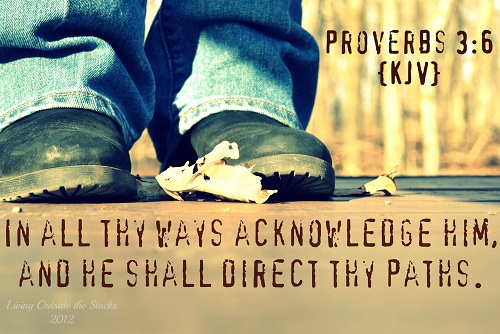
     David’s experience in Psalm 34 shows a person as a victim of circumstance, like when a tornado picks up your house and takes you away. He is praising God for getting him out of a close call with the Philistines. His father-in-law, King Saul, is hunting him down (so much for family). David, desperate to elude him, slips into the enemy Philistine city of Gath and ends up out of the frying pan and into the fire. So what do we do when we don’t know what to do? David improvises. In order to save his life, he pretends to be out of his mind, counting on the thinking at the time that it was wrong to kill an insane person. He puts on a pretty good show: drooling, odd rantings, and scratching on the doors, all the while praying desperately in his head for God to get him out of there! His gutsy move pays off and the king expels him in disgust.  In our Wizard of Oz story, we have a Gale in a tornado plummeting down to a strange world. In Munchkinland, Dorothy comes out of her house to discover that she is guilty of involuntary witch slaughter and needs to get to the Emerald City to escape the wicked sister. Her path is laid out before her: follow the yellow brick road. The question is how did the yellow brick road get there in the first place? It had to be mapped out, surveyed, leveled, and constructed by someone who knew it would be needed. She must reach out of herself and trust the Engineer of the road to get her where she needs to be. Fortunately, that’s what she does. Suppose, though she said, “You know, this yellow brick road thing doesn’t work for me. That wheat field over there reminds me of Kansas. I think I’ll head off that way.” Sounds foolish, but don’t we do exactly that when we ignore doing what we know God says is right?  In fact, in one scene, with the Emerald City in sight she does leave the road and gets in trouble in the poppy field. Whether you’re winging it like David or following guidance like Dorothy, when we are in troubling circumstances the Bible tells us to “Trust in the Lord with all your heart and don’t lean on your own understanding. In all your ways acknowledge Him and He will direct your path” (Proverbs 3:5-6). It’s all the difference between confidently skipping down the road and carelessly dancing in the dark. Whose road are you walking on?


The Shared Journey

     In any fictional adventure, there is a message. Besides spinning an awesomely good yarn, the author wants you to be absorbed in the story, implant the characters in your mind, and have them linger there. You share in their journey by laughing with them, crying with them, and, in the end, their triumph is your victory too. In this experience, the writer asks you to consider his message and become changed. People have read between the lines of L. Frank Baum’s Wizard of Oz and have found a friend or an enemy in it. Either way he has influenced countless people over the years with his classic. The God of Abraham, Isaac, and Jacob wrote an epic all His own: the Bible. In it, He rescues the Hebrews out of slavery, feeds them manna in the desert, miraculously provides water, keeps their clothes intact, and defends them against much stronger enemies. All along the journey, their triumphs and tragedies bond them together to their God.  In our reading in Joshua, they have crossed the Jordan River into the land of Canaan. It’s their graduation from the Exodus struggle! The children of Israel are resting, reflecting, and regrouping as they prepare for the next chapter in their adventure with their God to claim the Promised Land. In the real world, the Author, God, can go beyond influencing people and move to having a relationship with Him, because, in essence; it’s a love story about them.


The Calvary Journey
 
     God climaxes His love story on the cross. 2 Corinthians 5:17-21 tells us that this relationship with God is through His Son Jesus Christ. The curtain is lifted in verse 21 where it is written, “God made Jesus, who knew no sin to be sin on our behalf, so that we might become the righteousness of God in Him.”  In the greatest story ever, told we journey to Calvary with Jesus and by faith join Him in the crucifixion.  The great switch happens and we become changed. We become a new creation. Forget the past! Our sins are GONE!  We become new people with a new job: ambassadors of Christ. We go on our earthly missionary journeys commissioned with the directive of the good news of reconciliation to God through Jesus Christ. And so, I beg you to make peace with the Almighty.  By faith, accept Jesus as your Savior and Peace Maker with God for the forgiveness of your sins. It will change you too and when you die, you will have a new home in heaven, far over the rainbow. There’s no place like home!


Monday, April 1, 2019

Mass Prep Sunday March 24th 3rd Sunday of Lent


March 24th 2019     3rd Sunday of Lent (Cycle C)

Wholly Holy

The tie in between today’s readings is: Sacred Space

     God’s holiness is very mysterious. Granted, no one can fathom the Almighty, but we can see His power in a tornado, push it to the edge of our mental capacity and say, “Whoa!” Scientists can “look” at a quantum particle in a collider and then turn the Hubble Telescope to maximum magnification of the universe and perhaps grasp a notion of Omnipresence. When it comes to holiness, however, we are clueless because there is no basis of comparison. It can’t be measured as more or less of something. Holiness is a state of being and is the very core of the Supreme Being. It is rigid, eternal, and exclusive. You either are or you aren’t holy and if you aren’t, you’re out! For fallen mankind this is the most terrifying of aspects. Biblical encounters with God’s holiness as we see with the prophet Isaiah are traumatic. It is only by His mercy that we are not duly disintegrated due our corrupt state against His Divine Nature. So how does a loving God even begin to have a relationship with sinful humans, who if we were magically transported to heaven would make the angels vomit? Well, you start by clearing off a sacred space.

     A sacred space is a location where God associates His presence in encounters with men. In the Old Testament altars were built to mark the spot, trees also took on this altar motif.  It’s a kind of God fingerprint, a spiritual electricity of sorts. Our reading in Exodus 3:1-15 is full of sacred space features. On Mt. Horeb God calls to Moses from the midst of the burning bush and tells him to take off his shoes because the ground is holy. The mountain and the bush take on prominence as sacred spaces. God links His eternal, I AM, name to the children of Israel by His association to Abraham, Isaac, and Jacob and so causes them to be holy. Their upcoming conquest of the Promised Land with the presence of YHWH in the tabernacle and later the temple makes the entire geography sacred space. When Moses goes to Pharaoh for the Exodus mission, the Lord says that the certainty of success lies in the fact that they will worship Him on this holy mountain where they were now standing. YHWH will be their God and they will be His people. God is a jealous God. He is all about the relationship and the relationship is holy.

     There is a tension between the sinner and the sacred. What happens when you’re not so holy after all? How does it affect the God to man dynamic when you break the rules? Well, if you go with cosmic karma God will ZAP you. Good things happen to good people, but bad people better watch out. Jesus blows this point of view out of the water in our reading in Luke 13:1-9. Taking the headlines out of the morning edition of the Jerusalem Times, He asks the crowd if they thought the people crushed by the falling tower or those Galileans that Pilate killed were worse than any of them. NO! Jesus drives home the point that we are too finite to understand the cause and effect of life. That said, there is a fate from a Holy God worse than death awaiting all of us. It is based on our sin. It is coming and it is devastating. Unless you repent, you will perish! Repent here means a total change of heart not just a change of mind or behavior. Our Lord launches into a parable about a fruitless fig tree. The owner is sick and tired of this tree not fulfilling its purpose. “Why does it even burden the ground?” he asks. The nuance here gives the tree a sinful persona. A good tree cooperates with its purpose and bears fruit, the bad tree not so much. So a person or a nation occupying sacred space needs to live in character with the Holy. The scene parallels God arguing with Himself as to whether judgment should come down or mercy be granted to a sinner. Mercy wins out this time...for a while and God gives every opportunity for a change. The message from a sacred space point of view is that what is unholy cannot remain in sacred space, one of two things must happen.


     The sinner must be removed. 1 Corinthians 10:1-12 gives a warning especially to the religious. Verses 1 to 4 chronicle the religious aspects of the Exodus. They were baptized into Moses through the Red Sea, ate manna and drank from the Rock, all of which spoke of Jesus, all of which tied the children of Israel to God through the sacred. It failed to make them holy because it only connected to them on a physical level. It did not penetrate. It did not change their fallen nature because so many times religious practices for all their piety and message stay on the surface. So, from verses 5-10, they lusted, committed idolatry, grumbled, and tested the Lord, until finally they were removed in dramatic fashion. Here God speaks loudly AND carries a big stick as a wakeup call to us. WATCH OUT! Removal from the holy presence of God and into outer darkness is what hell is all about!

     The sinner must be changed. Psalm 103:1-11 praises God for His mercies. The Lord among other things pardons your iniquities, redeems you from the pit, crowns you with compassion, and does not deal with you according to your sin. Instead of judgment, He dispenses grace. But this only comes through Jesus’ sacrifice on the cross. Something amazing happens when you confess Jesus as your Savior and Lord by faith. God changes your very nature and you become a bonafide child of the most High. In this change He places His Spirit in you, which makes you a temple of the Holy One and fit for heaven. You become actual sacred space and want to live accordingly!  This change is awesome the angels shout! So, my friend, you have a choice. The sands of God’s patience are running through the hourglass of your life. You still have time to repent. Believe on the Lord Jesus Christ and you shall be saved. Tick-Tock.